01 Introduction
By the time someone reaches your headline, the space has already told them most of what they will remember.
Ask a client what their exhibition says and they will hand you a message. Ask a visitor what it said and they will describe a route.
This gap explains most disappointing exhibitions. Enormous care goes into the content, and comparatively little into the thing that determines whether the content is ever encountered: how a body moves through a room.
The first three seconds are spatial
A visitor arriving at a stand or a gallery makes a decision before reading a single word. They are answering three questions with their eyes and their feet.
Can I get in? Anything that reads as a barrier converts a passer-by into a passer-on. Openness at the floor is worth more than any amount of graphic invitation above it.
Where does it go? People are less likely to enter a space whose exit they cannot see. A visible route through is one of the strongest tools available to anyone designing for footfall.
Is this for me? The answer comes from register, not text: materials, lighting, sound and whether there is anywhere to sit. A standing-height environment says transaction. Two chairs and a low table say conversation.
Pace is a design decision
A route through a space has a rhythm. Compression and release remains one of the most reliable spatial moves: a narrow, low or darker passage followed by an open, tall, bright space changes pace without an instruction sign.
Visitors may remember one or two spatial moments. Spend them deliberately.
Where attention actually goes
- Use high zones for identification at distance, not dense reading.
- Treat the first metre inside a threshold as a decompression zone.
- Design a visible route through, including a clear way out.
- Remember that a queue is an experience with a duration, a view and a temperature.
The cultural layer
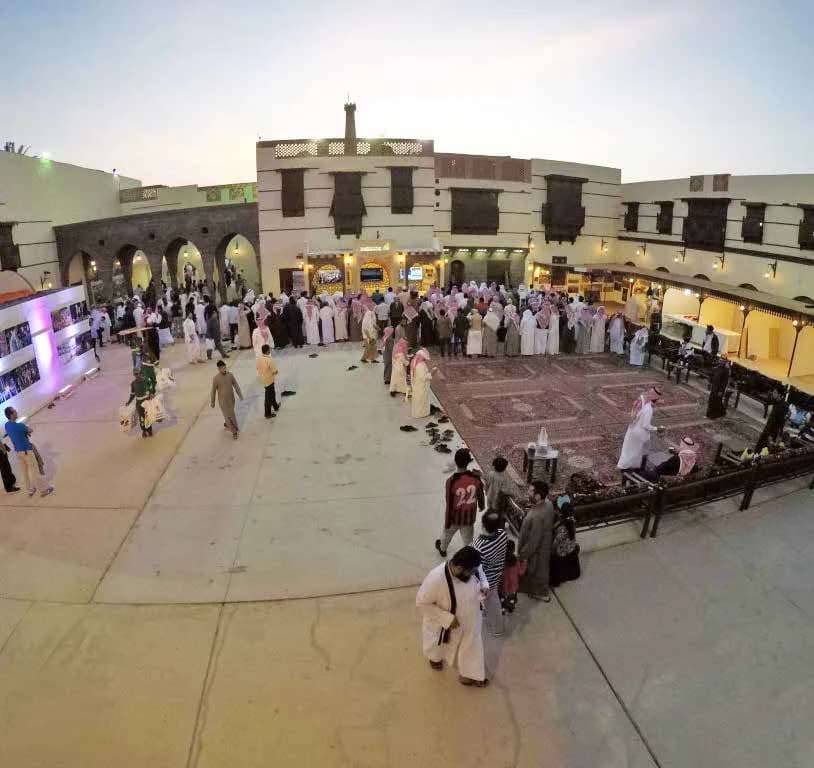
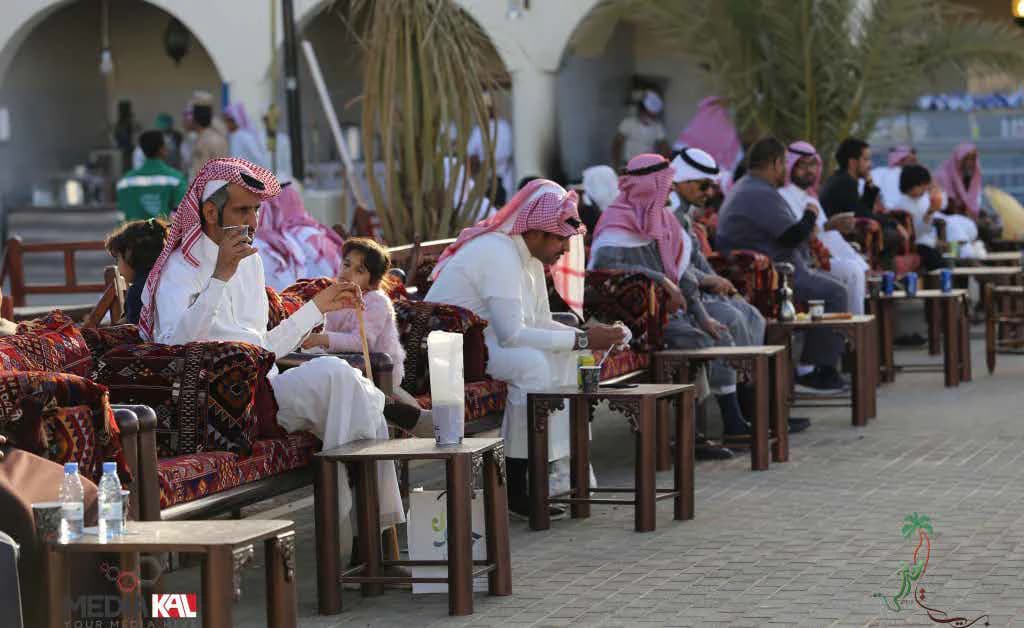
In Saudi settings, circulation can carry additional requirements: family routes, separate provision where the occasion calls for it, prayer timings that empty and refill a hall, and hospitality that forms the first impression.
These are not constraints applied after the design. They belong in the design brief. A layout that anticipates the daily rhythm can create a natural pause point, a clear place to leave and return to, and a team that understands the pattern.
The measure
The question worth asking at the end of an exhibition day is not only how many people came. It is where they stopped, for how long, and what they were looking at when they did.
That information is available to anyone prepared to stand at the back and watch.